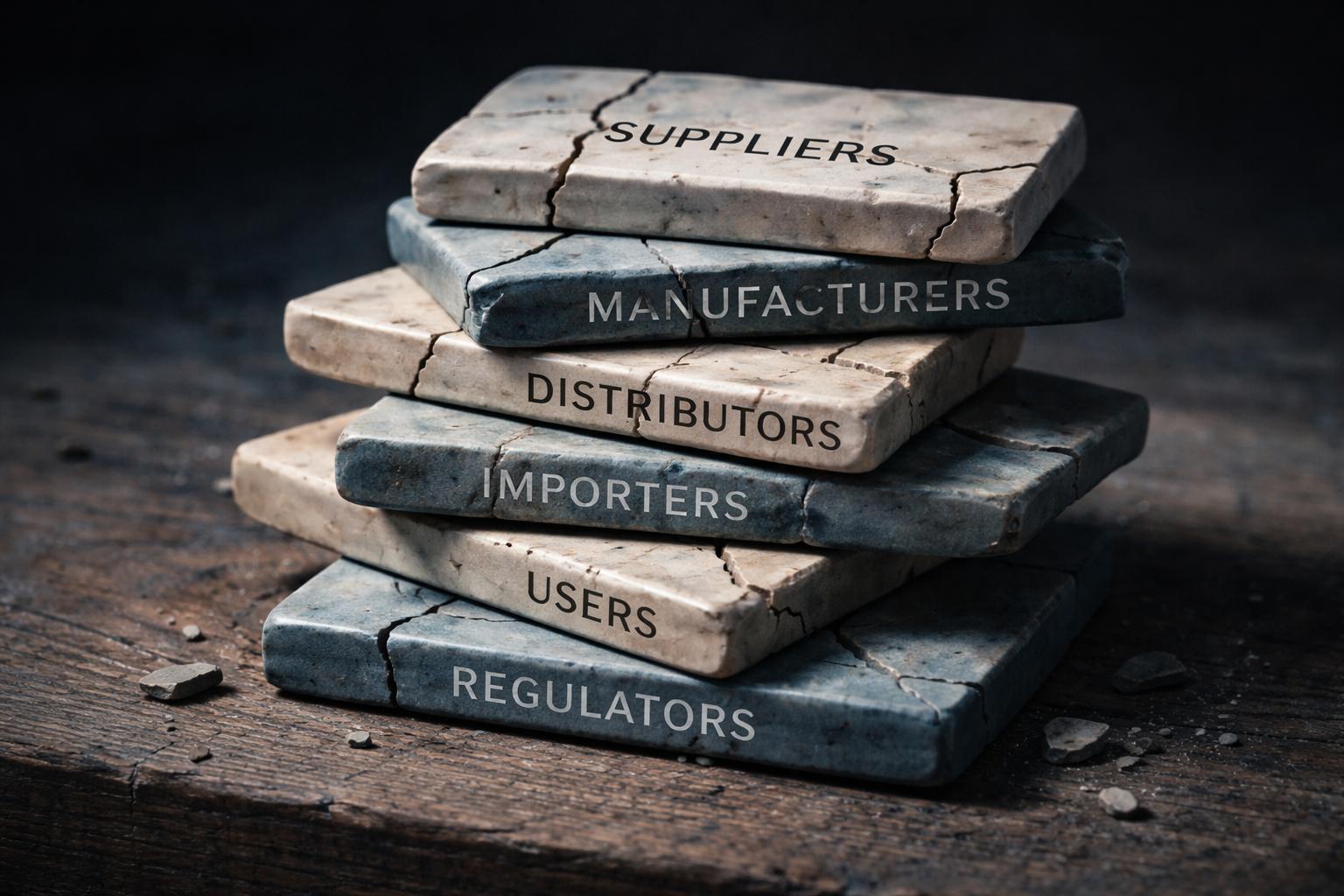
Your developers are using AI coding assistants right now. They're generating pull requests, suggesting dependencies, and writing security checks. But the mental models most teams have about these tools are dangerously outdated.
These myths persist because AI coding tools arrived faster than our understanding of how they work. Your team treats them like advanced autocomplete when they're actually making architectural decisions that affect your attack surface. Let's fix that gap.
Myth 1: "The AI knows what's secure because it was trained on millions of repositories"
Reality: Training data becomes stale the moment the model ships.
AI coding assistants learn patterns from historical code, but your threat landscape isn't historical. A library that was secure in the training dataset might have disclosed three CVEs last month. The model doesn't know about those vulnerabilities because it can't see beyond its training cutoff date.
This matters when your AI suggests a dependency. The code might look clean, compile correctly, and match patterns the model learned from popular repositories. But if that package was compromised in a supply chain attack six weeks ago, your AI won't flag it. It can generate code in seconds, but you need confidence that code won't introduce known vulnerabilities into production.
Your scanning tools will catch some of this during CI/CD, but by then you've already merged the dependency and started building on it. The cost of ripping it out multiplies with every sprint.
Myth 2: "If the AI suggests it, it must be compatible with our stack"
Reality: AI models don't track version conflicts or deprecation cascades.
Consider what happens when your AI assistant suggests a utility library. It knows the API patterns and can generate syntactically correct code. What it doesn't know: that library requires Python 3.11, your infrastructure runs 3.9, and upgrading Python means rewriting your authentication middleware because of breaking changes in a core dependency.
The model learned that this library solves your problem. It didn't learn your constraints because those constraints didn't exist in its training data. You're running specific versions of frameworks, specific OS builds, specific runtime configurations. The AI is working from aggregate patterns across thousands of codebases with different constraints.
This isn't theoretical. Teams waste days debugging integration issues that looked trivial in the AI's suggestion. The code worked in isolation. It failed in your actual environment because the AI couldn't see your environment.
Myth 3: "We can just review the AI's suggestions like any other code review"
Reality: Standard code review doesn't catch supply chain risks buried in dependency trees.
When a senior engineer writes code, you review the logic, test coverage, and obvious security issues. When AI generates code that pulls in three new dependencies, you're reviewing the same things but you're missing the transitive dependency graph.
That innocent-looking utility package? It depends on 47 other packages. One of those is maintained by a single developer who hasn't committed code in 18 months. Another has a known vulnerability that hasn't been patched because the maintainer is dealing with a personal crisis. Your code reviewer doesn't have time to audit 47 packages and their maintainers.
The AI made recommendations that are plausible and syntactically correct, but not necessarily safe or sustainable. Your review process wasn't designed to catch supply chain risks because you built it before AI was writing 40% of your codebase.
Myth 4: "The AI will learn from our feedback and improve over time"
Reality: Feedback loops are slower and narrower than you think.
You reject an AI suggestion because it uses a deprecated API. Great. But that feedback doesn't immediately update the model your team is using. It might influence the next training cycle, which happens on the vendor's schedule, not yours. Meanwhile, your other developers are getting the same bad suggestion.
Even when feedback does flow back, it's aggregated across all users. Your specific constraints (compliance requirements, architectural decisions, security policies) get diluted in the noise. The model might learn "developers sometimes reject this pattern" but not "this pattern violates PCI DSS v4.0.1 Requirement 6.2.4 for our specific use case."
You need the AI to know your rules now, not after the next training cycle. Grounded AI helps coding assistants make recommendations that are not just plausible, but usable and safe for your specific context.
Myth 5: "Adding AI coding assistants doesn't change our security responsibilities"
Reality: You're now responsible for validating machine-generated architectural decisions at scale.
Before AI, your developers made dependency choices consciously. They researched options, checked maintenance status, read changelogs. The decision velocity was human-paced.
Now your AI can suggest 20 dependencies across 10 pull requests in a single morning. Each suggestion looks reasonable in isolation. Collectively, they're expanding your attack surface faster than your security team can assess it. You've automated code generation without automating the supply chain intelligence that makes those generations safe.
This creates a new category of risk that doesn't fit your existing controls. Your SAST tools check the code. Your SCA tools check known vulnerabilities. But neither answers: "Is this component actively maintained? Is the maintainer trustworthy? Are there better alternatives with stronger security track records?"
What to do instead
Stop treating AI coding assistants as simple productivity tools. They're making supply chain decisions that affect your compliance posture and security risk.
You need real-time software supply chain intelligence feeding into your AI tools. That means:
Connect your AI to current vulnerability data. Not the CVE database from six months ago that's baked into the training data. The feed that updated this morning.
Build dependency evaluation into the suggestion flow. Before the AI recommends a package, it should check: maintenance status, known vulnerabilities, license compatibility, version conflicts with your existing stack.
Make your constraints explicit. Your AI should know you're bound by SOC 2 Type II controls, that you've standardized on specific frameworks, that you have architectural decisions that rule out entire categories of dependencies.
Validate the AI's supply chain knowledge. Pick five dependencies your AI recently suggested. Check when they were last updated, who maintains them, what their transitive dependencies look like. If your AI doesn't have that context, it's making recommendations blind.
The speed of AI code generation is valuable. But speed without intelligence just means you're introducing vulnerabilities faster. Ground your AI in real-time supply chain data or accept that you're building on foundations you can't verify.